Stuffed up, with a face that aches? Facial exercises for sinus relief are really gentle massage moves on your forehead and cheeks. They may ease pressure, though research is limited.
This page is one part of our broader guide to facial exercises, which also covers goals beyond sinus comfort.
| Item | Value |
|---|---|
| Massage time per area (Healthline) | About 30 seconds |
| Small study on sinus headache | 35 women |
| Sinus pressure that calls for a provider | More than 10 days |
| Fever that calls for a provider | 103 degrees Fahrenheit or higher |
| Decongestant nasal spray limit | Three days |
These figures come from Cleveland Clinic’s sinus pressure page and Healthline’s sinus massage page. Figures can change, so check the sources before you rely on them.
What the evidence says about sinus massage
The honest answer is that there is limited evidence for it. Healthline says not a lot of research has been done, though one study found facial massage therapy significantly reduced the severity of sinus headaches in 35 women.
An ear, nose and throat doctor quoted by Sharp HealthCare says a few small studies look promising but more research is needed. He also notes that a bone sits between the face and the sinuses, so it is unclear how massage would drain them, and some relief could be a placebo effect or simple muscle relaxation.
The licensed massage therapist in Cleveland Clinic’s sinus massage article says there are no research studies behind the practice, yet in her experience it may help things flow again. Treat these moves as a comfort measure, not a treatment.
If you also practise muscle-toning routines, our guide to how long to see results from face exercises covers that separate timeline.
Know where your sinuses are
Your sinuses are hollow spaces in the skull, and Healthline notes the human body has four pairs of them. You do not need to learn all of them, because you can work only on the areas that bother you.
- Frontal sinuses: the bottom part of your forehead, around the inner ends of your eyebrows.
- Maxillary sinuses: just under your eyes, behind your cheekbones on each side.
- Sphenoid and ethmoid sinuses: deeper, behind your eyes and behind the bridge of your nose.
According to Cleveland Clinic, sinus pressure can feel like tightness or achiness around your eyes, nose, forehead or cheekbones. It can even radiate to your scalp, teeth and jaws.
A gentle routine you can try
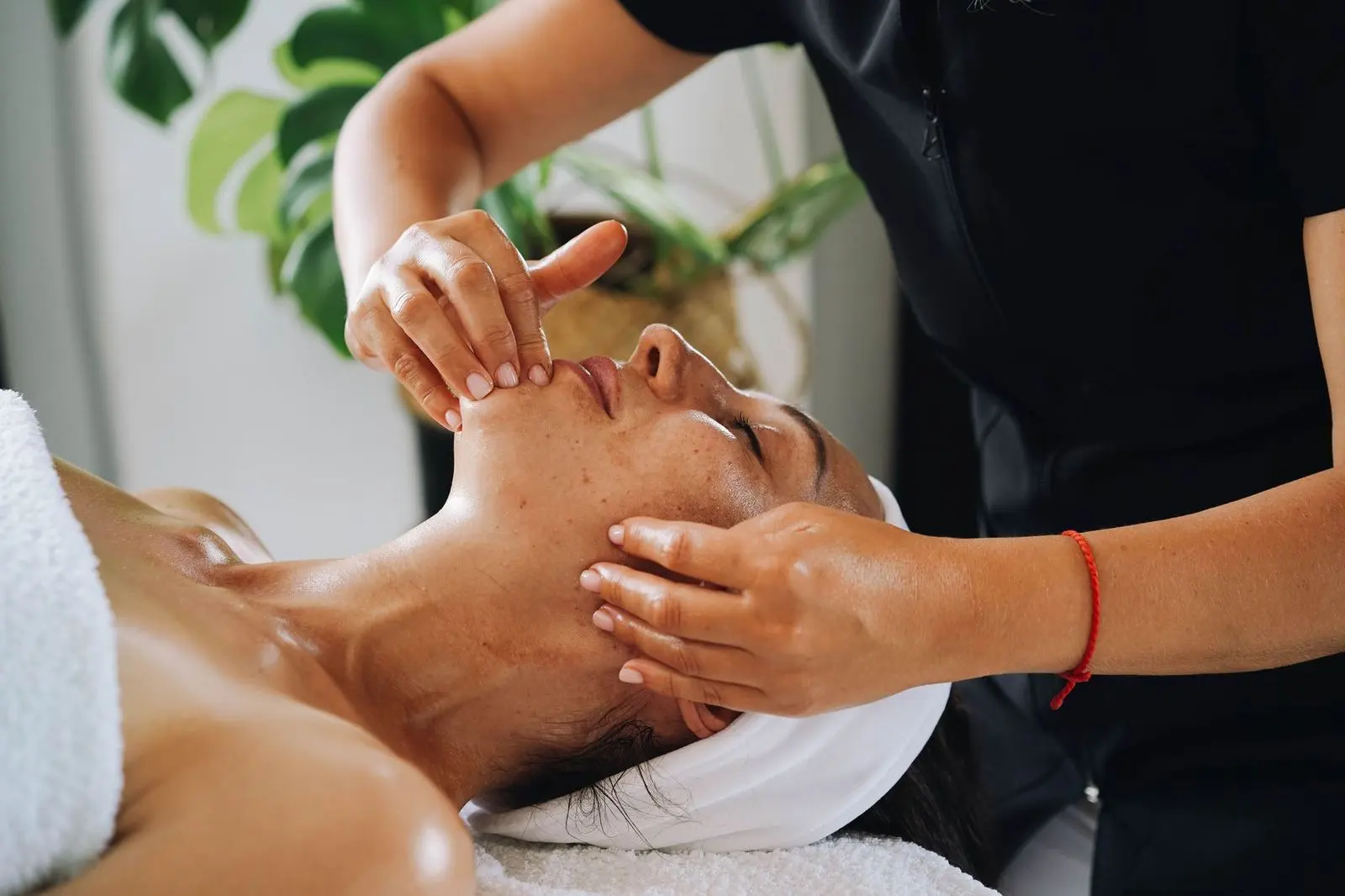
Start by rubbing your hands together to warm them, as Healthline suggests. Then keep a feather-light touch: the Cleveland Clinic massage article says it should feel like the weight of a penny on your face.
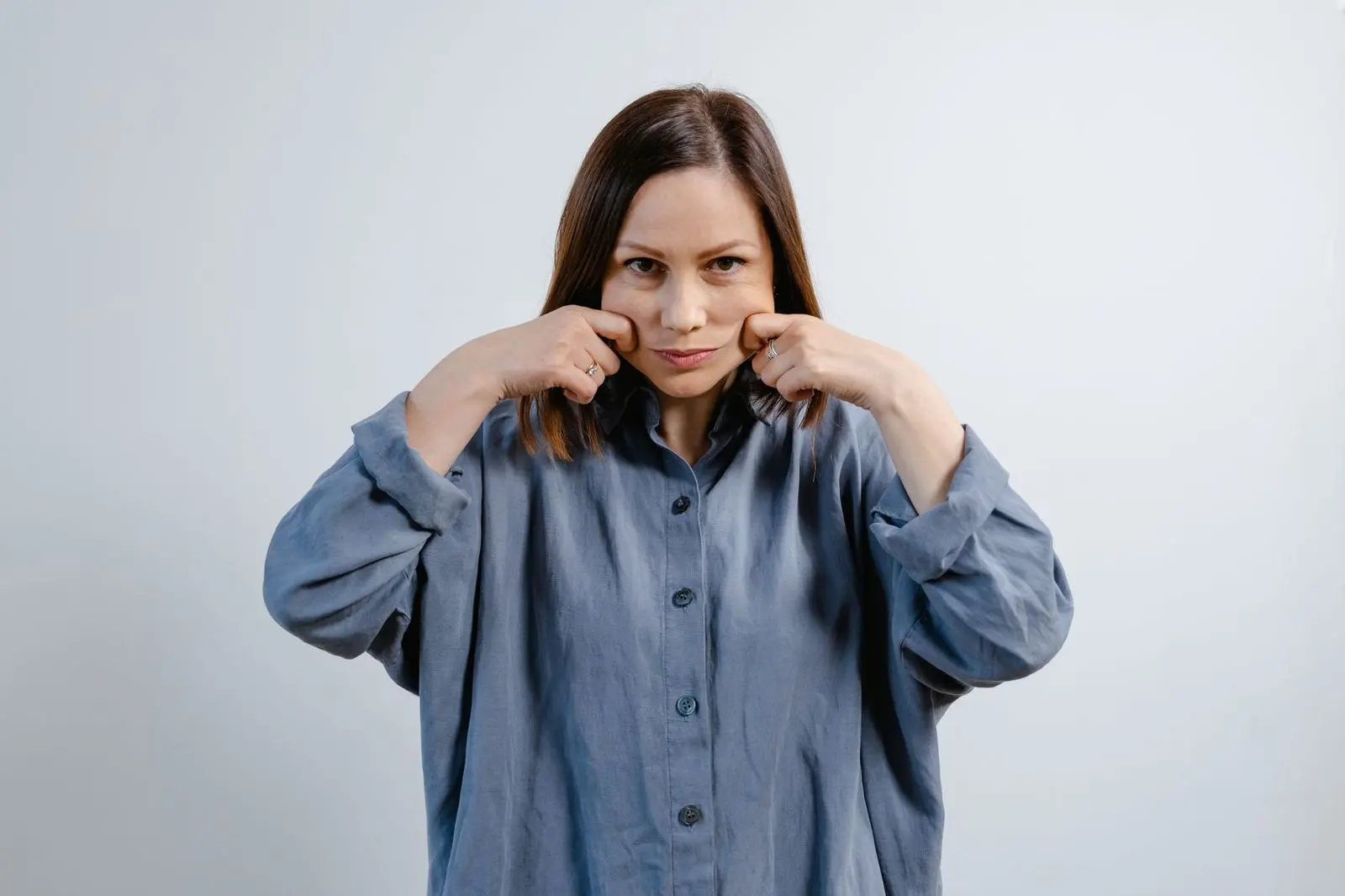
The five steps below follow the routine in that Cleveland Clinic article. Stop any step that feels uncomfortable.
- Frontal pressure point. Trace your index fingers up the sides of your nose to where it curves toward the brow bone. Press very lightly, release for a second, and repeat, or make tiny circles, for about five to 10 seconds.
- Frontal pinch. Starting at the inner brows, gently pinch between thumb and forefinger, hold a second or two, and move toward your temples. It takes four or five pinches to cross each brow.
- Maxillary pressure point. Rest your index fingers where your nostrils meet your cheeks, at the top of your smile lines. Use the same light pressure for about five to 10 seconds.
- Maxillary sweep. From the base of your nostrils, circle under your cheekbones toward your ears, up to your temples, and down the sides of your nose. Do about five circles, then try the other direction.
- Frontal sweep. Place four fingertips on each inner brow and sweep up and out. Move up about a half inch with each sweep until you reach your hairline.
How light, how long and how often?
Pressing hard is the main thing to avoid. Cleveland Clinic warns that going too hard can lead to lightheadedness, dizziness or even vertigo, and says your eyebrows shouldn’t move or squish beneath your fingers.
For timing, Healthline describes about 30 seconds of circular massage on each area. A table of techniques in a published rehabilitation paper lists a self-massage plan of three sets of 30 seconds, repeated twice a day.
Healthline adds that there isn’t any reliable research on whether relief lasts. Some therapists suggest repeating the massage through the day so pressure doesn’t build up again.
Heavy-handed pressure is one of several slip-ups covered in our guide to face exercise mistakes.
Other things that pair well with massage
Massage works best as one tool among several. Cleveland Clinic calls keeping your nasal passages moist one of the most effective ways to relieve sinus pressure, and says to use distilled or sterile water if you irrigate.
- Steam: a hot shower or a humidifier can help open nasal passages.
- Hydration: dehydration can make sinus pressure worse.
- Elevation: prop your head on a few pillows before sleep.
- Decongestants: do not use oral ones for more than one week without a provider, and limit nasal sprays to three days to avoid rebound congestion.
An ENT doctor at Sharp HealthCare recommends saline nasal irrigation at home, which can thin mucus and reduce swelling.
When to stop and see a provider
Massage is not a substitute for care. Cleveland Clinic says to call a provider for a fever of 103 degrees Fahrenheit or higher, or sinus pressure that has lasted more than 10 days.
The same page lists signs of a sinus infection, such as sore throat, discolored postnasal drip or a runny nose, plus severe pain that doesn’t improve with medication. If you have an infection, you may need antibiotics or other medications that only your provider can prescribe.
Sharp HealthCare gives a similar threshold, advising a doctor visit if congestion lasts longer than 10 days or comes with severe headache or facial pain.
Frequently asked questions
Can you do these moves every day?
Show answer
None of the sources set a firm daily limit. The research table above used a twice-a-day plan, and you can see it in the PMC table. Stop if you feel dizzy or sore.
Do these moves tone or lift the face?
Show answer
The sources describe them as massage for comfort and drainage, not muscle building. Nothing in them supports a toning or lifting claim.
Is it okay to massage during a sinus infection?
Show answer
Ask your provider first. Bacterial infections can need prescription treatment, so a gentle self-massage should only be a side measure.
Should you use your thumbs for more pressure?
Show answer
Healthline mentions thumbs for stronger pressure on the cheek area. Cleveland Clinic’s advice leans the other way, with index fingers and a very light touch, so start light. See Healthline for its version.