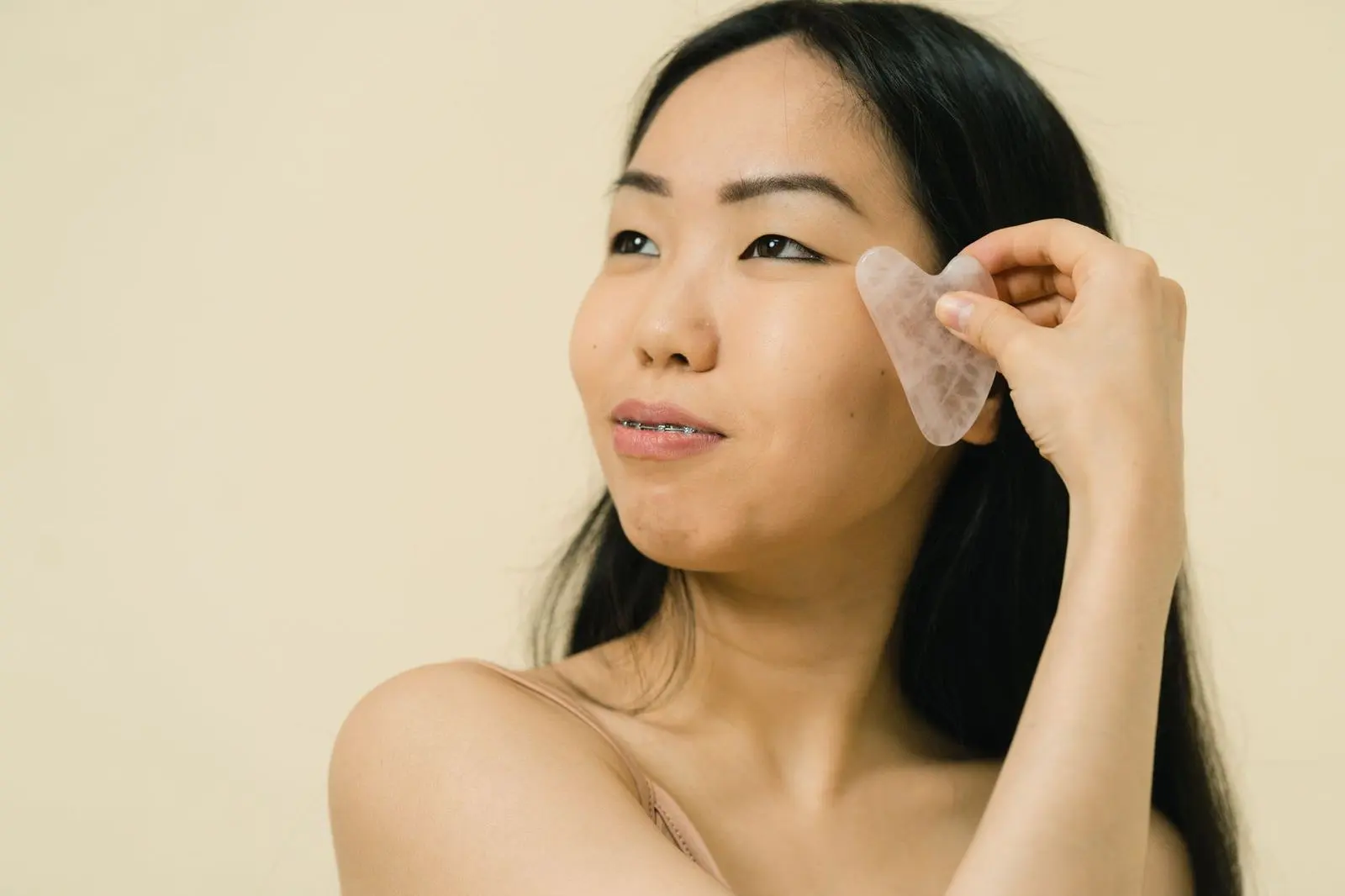
Wondering how to use a gua sha without irritating your skin? Use a flat, smooth-edged tool over a little oil or serum, keep the pressure light, and stroke your face and neck gently. Gentle beats forceful every time.
This guide is part of our series on skincare habits.
| Item | Value |
|---|---|
| Age of the traditional practice | Nearly 2,000 years |
| Length of the 2025 facial trial | 8-week intervention |
| Facial surface distance change in that trial | About 2.2 to 2.4 mm |
| Participants in the 2007 blood-flow pilot | 11 healthy subjects |
| How long the blood-flow rise lasted in that pilot | Roughly 25 minutes |
These figures come from McGill’s Office for Science and Society and Dermatology Times. They can change as new research appears, so check the sources before you rely on them.
What a facial gua sha actually does
Facial gua sha is a gentle spin-off of a much older practice. McGill’s Office for Science and Society traces the traditional technique back nearly 2,000 years, to the end of the Han dynasty.
The old version uses firm pressure and creates bruises that heal after a few days, according to the same McGill report. The same report notes that the stone most often used on the face is made of jade and is stroked over the face and neck to ease puffiness.
The most plausible benefit is temporary de-puffing. Dermatology Times explains that directional pressure can move fluid toward draining lymph nodes, which can visibly reduce facial puffiness within minutes.
How to use a gua sha, step by step
A routine this simple needs only a smooth-edged tool, a little slip and a few quiet minutes. Work through the steps in order, and keep every move slow.
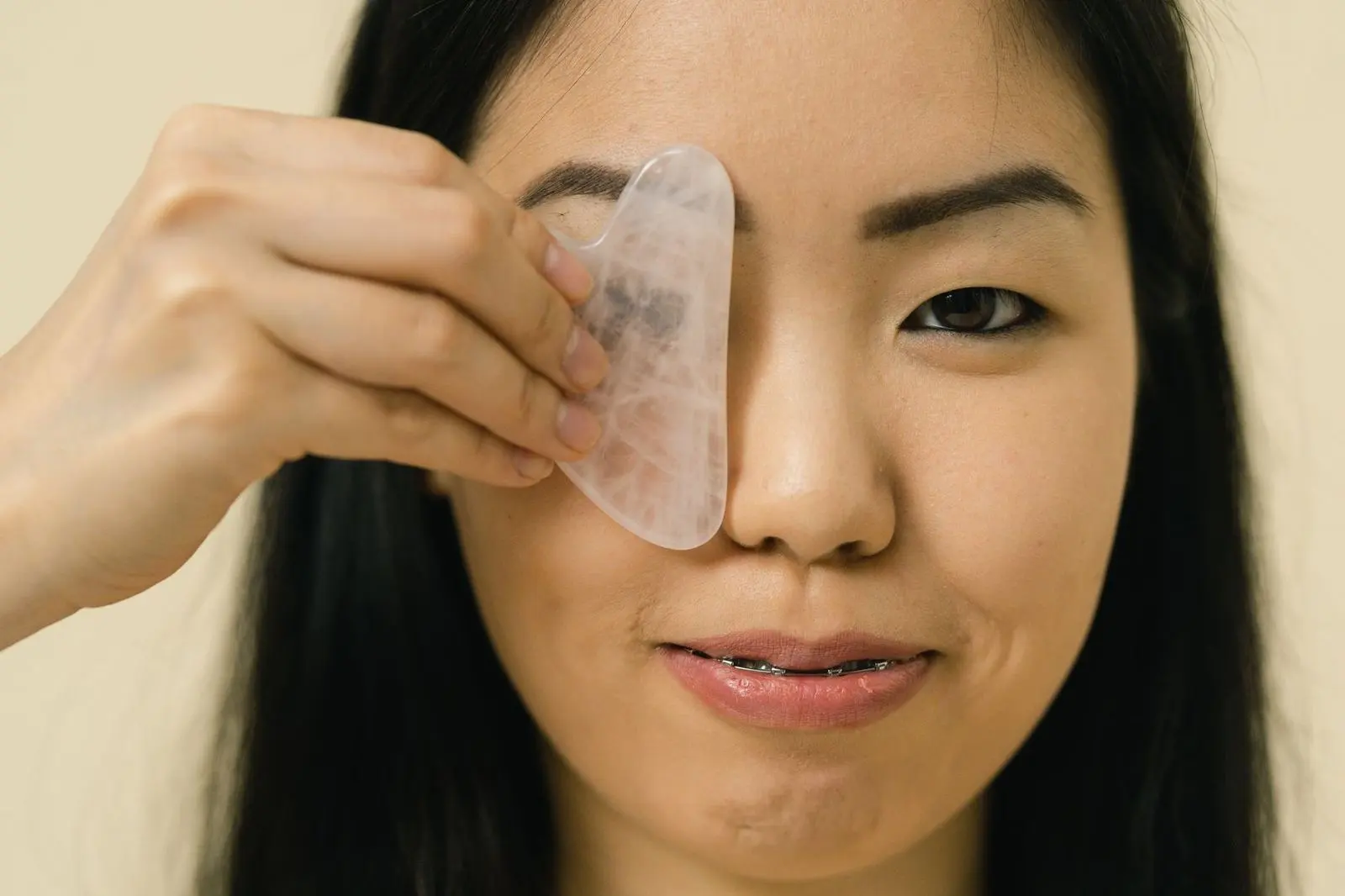
- Pick a flat, smooth-edged tool. Dermatology Times lists jade, rose quartz, bian stone and stainless steel as the usual materials.
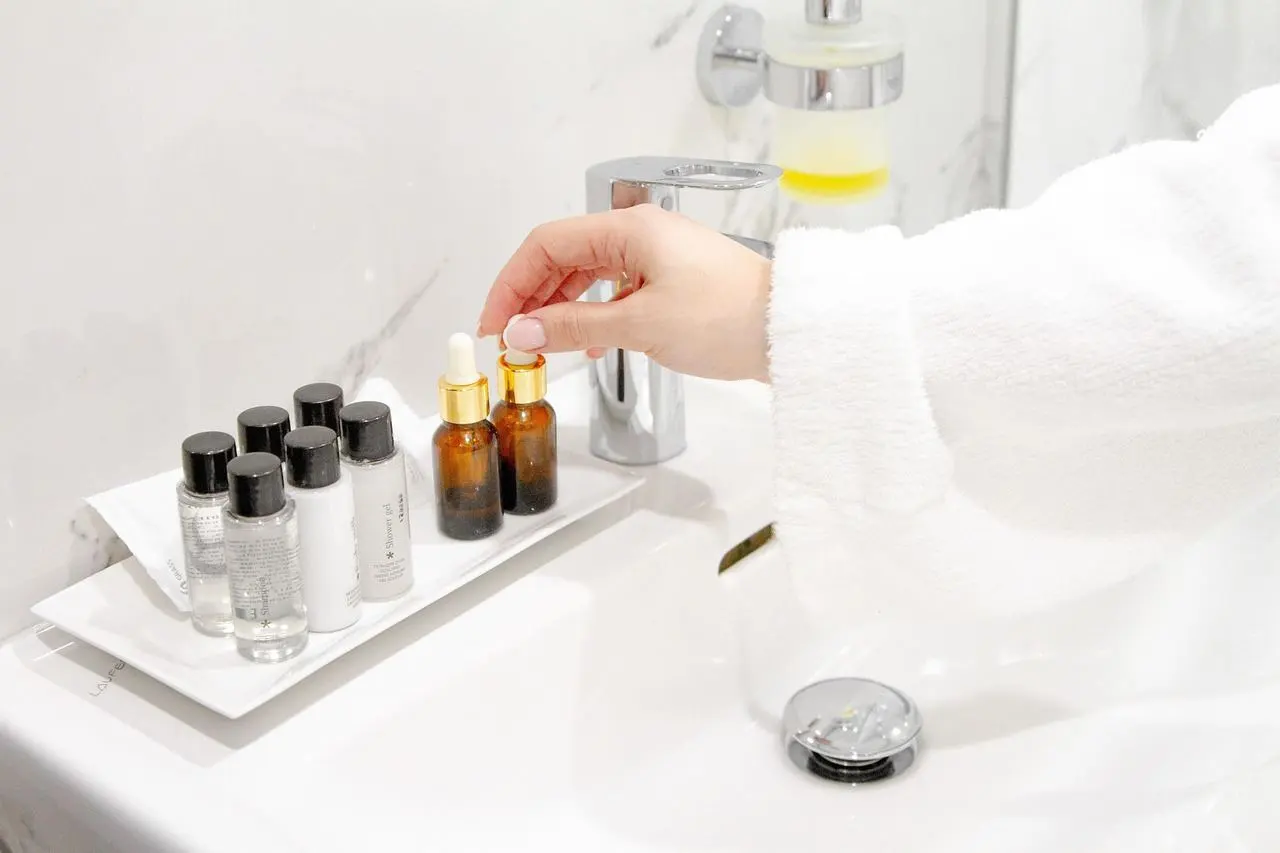
- Add slip. The same report says creators typically work over an oil or serum, so the tool glides instead of dragging.
- Keep the pressure light. Start soft and only add a touch more if it feels comfortable.
- Stroke with intent. Use slow, directional strokes across your face and neck, the kind of movement that can nudge fluid toward draining lymph nodes.
- Watch your skin. Lighten up at once if you feel discomfort or see spotting.
That gentle approach is the version described in the Dermatology Times look at the trend. If you are unsure how your skin will react, a dermatologist can advise you before you start.
Pressure and direction: keeping your skin safe
Facial skin is less forgiving than the back. Dermatology Times points out that the face has a thinner dermis and more superficial capillaries, so firm pressure bruises it more easily.
The same report describes the red or purple spotting that follows vigorous gua sha as pinpoint bleeding from surface capillaries caused by mechanical trauma. Treat any spotting as a sign you pressed too hard.
Use these quick checks while you work:
- The tool should glide, not drag or tug at your skin.
- Your skin should look calm afterward, with no spotting or marks.
- Any discomfort should be minor and fade quickly.
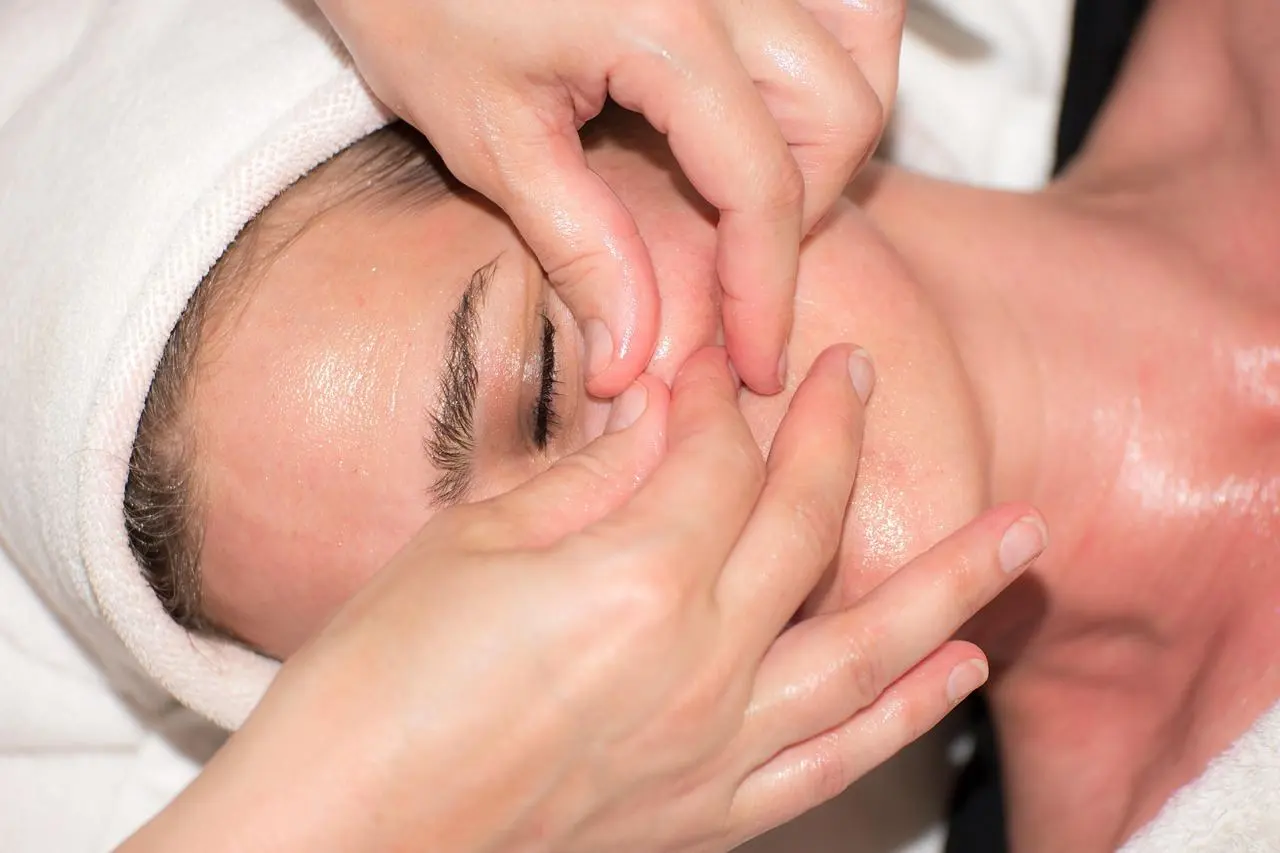
If you would rather use your hands, our guide to facial massage technique covers a similar light-touch approach.
Who should skip facial gua sha?
Dermatology Times says people with vascular fragility are the most likely to develop visible capillary injury from repeated scraping pressure. That group includes:
- People with rosacea
- People with active telangiectasia
- Anyone with other vascular fragility
If that sounds like your skin, ask a dermatologist before you start.
Gentle tools also pair well with a steady daily sunscreen habit, since your face is exposed every day.
What results can you realistically expect?
The best facial-specific evidence so far is a 2025 randomized controlled trial that ran for an 8-week period, reported by Dermatology Times. The gua sha group showed facial surface distances shrinking by approximately 2.2 to 2.4 mm, a modest change that the report links to fluid and muscle tone rather than a structural makeover.
A much-quoted 2007 pilot measured a roughly fourfold rise in skin blood flow that lasted around 25 minutes in 11 healthy subjects, as the same article describes. That study used firm pressure on the back, so it does not prove anything about gentle work on the face.
A 2023 systematic review found the overall evidence still too thin to back definitive anti-aging claims, according to that report. McGill’s Office for Science and Society adds that gua sha studies tend to be small, run at single centres, and lack long-term follow-up.
The same Dermatology Times piece lists what the data does not support:
- Permanent wrinkle reduction
- Collagen stimulation strong enough for lasting structural change
- Fat or bone remodeling
- Permanent jawline sculpting and face slimming
- “Detoxification” in any physiological sense
Frequently asked questions
Do I need oil or serum?
Show answer
Most routines include one. Dermatology Times describes creators working over an oil or serum, which keeps the stone moving smoothly across the skin.
Should gua sha hurt?
Show answer
No. Facial skin is thin, so heavy pressure can leave marks; lighten your touch whenever the tool tugs or stings. Dermatology Times ties bruising on the face to firmer pressure.
Can it permanently sculpt my jawline?
Show answer
The evidence points the other way. Dermatology Times describes the visible slimming as a fluid-shift effect, not a change to fat, fascia or bone.
Is the social media version the same as traditional gua sha?
Show answer
Not quite. McGill’s Office for Science and Society says the gentle online routine is heavily diluted from the real practice, which leaves red-and-purple bruises.