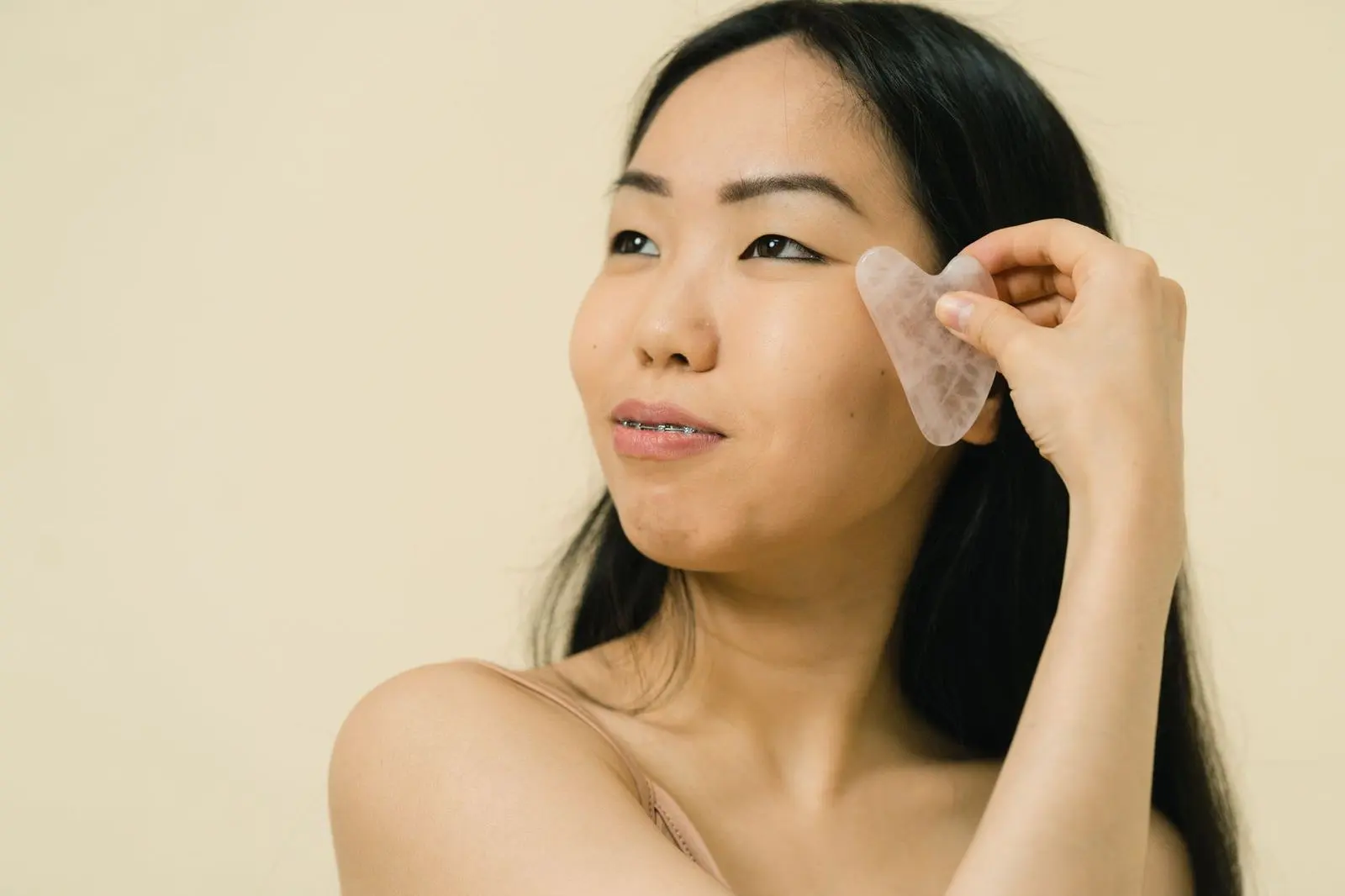

You want healthier-looking skin without a crowded shelf of products. The core skincare habits are simple: daily sunscreen, regular moisturizing, no smoking and a monthly skin check.
| Habit detail | Value |
|---|---|
| Sunscreen strength suggested | 30 SPF or higher |
| Sunscreen per application | 1 ounce |
| Moisturizer timing after a shower | Within three minutes |
| Skin cells shed each day | About 40,000 skin cells |
| UV on a snowy or cloudy day | About 20% less than on a sunny day |
| Share of sun exposure before the age of 18 | About 60% |
These figures come from dermatologist advice in a Cleveland Clinic skin care guide. Figures can change, so check the source before you rely on them.
Make sunscreen the habit you never skip
Dermatologist Dr. Khetarpal recommends wearing sunscreen of 30 SPF or higher every day, according to the Cleveland Clinic guide. She also notes that on a snowy or cloudy day there are about 20% less UV rays than on a sunny day, so weather is a weak reason to skip it.
Sun damage starts early: the same Cleveland Clinic page says about 60% of sun exposure happens before the age of 18. That makes the habit worth building young and keeping up later.
How you apply it matters as much as which bottle you pick. The guide says to use 1 ounce, about the size of a shot glass, and to reapply every two hours to stay protected and avoid sunburns, as Cleveland Clinic explains.
Dr. Khetarpal adds a few practical points:
- Physical sunscreens, the kind that reflect the sun, are her preferred type whenever possible, because they work better when used properly.
- Check the expiration date, since sunscreen loses its protective properties once it has expired.
- UPF clothing can add some extra protection on top of sunscreen.
Our guide to the daily sunscreen habit shows how to make this step automatic.

Build a simple daily routine around moisturizer
A routine is a repeatable order, not a long list. Our guide to the morning skincare routine order shows how to layer products at the start of the day, and the night skincare routine guide covers the evening.
Dry skin is part of the reason a moisturizer belongs in both. Per Cleveland Clinic, the oil glands in our skin become less active with age, so skin dries out, becomes sensitive and is more prone to irritation.
Dr. Khetarpal recommends using a moisturizer within three minutes after getting out of the shower to lock in the water and keep skin hydrated, according to the guide. Applying it while your skin is still damp is an easy cue to remember.
Fragrance deserves a second look too. The same source says fragrance can pull moisture out of your skin and make you more prone to allergies, irritation and dryness, and it suggests fragrance-free products whenever possible, including laundry detergent and dryer sheets.
If you can’t give up a scented product, Cleveland Clinic suggests a use test. Put a small sample on your body and watch for a negative or allergic reaction over a 24-hour period.
Everyday choices beyond the bottle
Your skin is the body’s protective barrier, and it keeps renewing itself: it sheds about 40,000 skin cells every day, as the Cleveland Clinic guide puts it. Habits that protect that barrier tend to be quiet ones.
Smoking is the clearest example. The guide says tobacco can cause stress to skin cells and make blood vessels constrict, and that the vessels supplying the skin shrink over time, which can lead to more wrinkling, premature aging and delayed healing, per Cleveland Clinic.
Pollution is another everyday load. The same page says pollutants can worsen conditions such as aging, acne, eczema and psoriasis, and Dr. Khetarpal suggests a topical antioxidant cream, serum or gel every day, such as vitamin C or vitamin E, according to Cleveland Clinic.

Does washing your face more often clear acne?
Not according to the dermatologist quoted by Cleveland Clinic. She says acne is largely genetic or hormonally driven and has nothing to do with personal hygiene or how often you wash your face.
Her suggested approach is benzoyl peroxide to kill the bacteria that cause acne, plus adapalene, a retinoid, to keep pores clean and clear. Treat that as general information, not a prescription for your skin.
Popping pimples is the other habit to drop. The guide warns that it could introduce an infection and make inflammation worse, which could lead to more scarring, and it advises spot-treating with a topical benzoyl peroxide cream instead.
Add a monthly skin check
Skin checks are the habit people forget. According to the American Cancer Society figures cited by Cleveland Clinic, skin cancer is the most common cancer in the U.S., with more than 5 million new cases diagnosed every year.
The same page quotes recent studies estimating 1 in 3 Americans will have skin cancer during their lifetime, and Dr. Khetarpal recommends monthly self-scanning exams. Use a mirror, good light and the checklist for signs of melanoma:
- Asymmetry: one half does not match the other.
- Border: the edges are not smooth.
- Color: mottled and uneven, with shades of brown, black, gray, red or white.
- Diameter: larger than a pencil eraser tip.
- Evolving: new, or changing in size, shape or color.
The guide puts the diameter cutoff at 6 millimeters, and it says any existing mole or lesion that is itching, bleeding or growing should be evaluated, according to Cleveland Clinic. If you spot one of these signs, book a visit rather than waiting.
Hands-on habits and sleep
Some people add touch-based routines to the basics. A walkthrough of facial massage technique covers the hand movements, and a guide on how to use a gua sha covers that tool.
Sleep habits can fit in here as well. Read about sleeping position and wrinkles if you want to look at how you rest, and see our hub on facial exercises for movement-based routines.
This guide cites no research for these extras, so treat them as optional additions to the sourced basics above. For more ideas across the site, browse our beauty tips.
Frequently asked questions
What is the most important skincare habit?
Show answer
Sunscreen, according to the dermatologist tips on Cleveland Clinic, which says you are never truly safe from the sun wherever you are from. Moisturizing and regular skin checks come next.
Do I need a long routine?
Show answer
No. The dermatologist advice in the Cleveland Clinic guide centers on a handful of repeatable steps: sunscreen, moisturizer, an antioxidant and fragrance-free products. A short list you can repeat is easier to keep.
Do I need sunscreen when I’m indoors?
Show answer
It can still help. The Cleveland Clinic dermatologist says UVA rays reach you while driving or sitting near a window, where they can dull skin and cause pigmentation.
When should I see a dermatologist?
Show answer
The American Academy of Dermatology describes a dermatologist as a medical doctor who specializes in treating the skin, hair and nails, in its skin care tips. Consider a visit for stubborn acne or any spot you are unsure about.