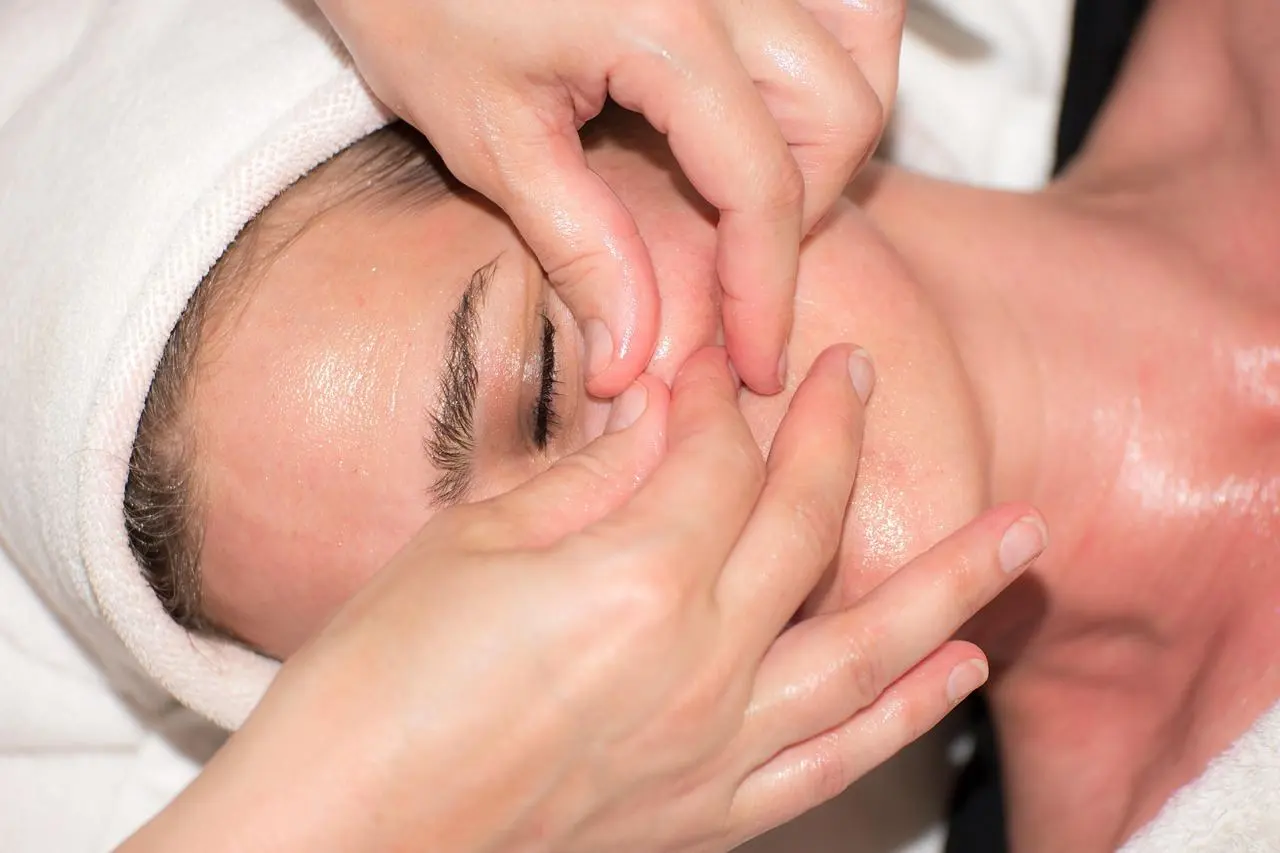

Too tired to juggle a shelf of bottles before bed? Your night skincare routine can be a short list of gentle steps: cleanse, treat if you use an active, then moisturize. Save sunscreen for morning.
Evening care is one piece of your wider skincare habits, so treat this page as the night chapter.
| Item | Value |
|---|---|
| Cleanser amount per wash | Nickel-sized amount |
| Retinol or retinoid amount | Pea-sized amount |
| Moisturizer frequency | Twice a day |
| Glycolic acid exfoliant | A couple times a week |
| Skin cycling schedule length | Four days |
These figures come from Cleveland Clinic and mindbodygreen. Guidance can change, so check the sources before you rely on them.
What should a night skincare routine include?
Cleveland Clinic’s dermatologist says the minimum is a cleanser followed by a moisturizer and sunscreen, in that order. At night that shrinks to cleanse, then moisturize, because you don’t need sunscreen after dark. Details are on the Cleveland Clinic page.
Layering follows one rule: go from lightest to heaviest, thinnest to thickest. A heavy cream applied before a thin serum keeps the serum from penetrating as well, according to the same Cleveland Clinic guidance, which Sean McGregor, DO, helped explain.
Keeping it short also protects your skin. The more products you use, the better the chances of side effects, the dermatologist warns on the same page. Dermatologists interviewed by NBC Select agree on a few key things, including retinoids and daily sunscreen, even though their routines range from short to extensive.
The night skincare routine, step by step
Here is the order from first to last. Only the cleanse and the moisturizer are essential.
- Remove makeup and sunscreen if you wore them. One mindbodygreen guide suggests an oil cleanser or micellar water and says to steer clear of makeup wipes, which can irritate skin.
- Cleanse. Cleveland Clinic puts the cleanser first, morning and night, mixed with water and washed on with your hands.
- Treat on the right nights. A retinol or retinoid takes the place of a morning serum, and a pea-sized amount is enough, per Cleveland Clinic.
- Moisturize. Do it after every cleanse, both morning and evening, as mindbodygreen puts it.
A hands-only wash is gentler than it sounds. Dermatologists generally recommend it over cleansing brushes, per mindbodygreen, which adds that a gentle silicone pad with light pressure is the choice if you must use a tool. Cleveland Clinic’s dermatologist also says hands are less abrasive than a washcloth, and a nickel-sized amount of cleanser is plenty (source).
Heavy eye makeup can be stubborn. Dermatologist Dr. Erum Ilyas told NBC Select that she uses a cotton round dipped in Vaseline, which she calls a safe and gentle way to remove stubborn makeup.
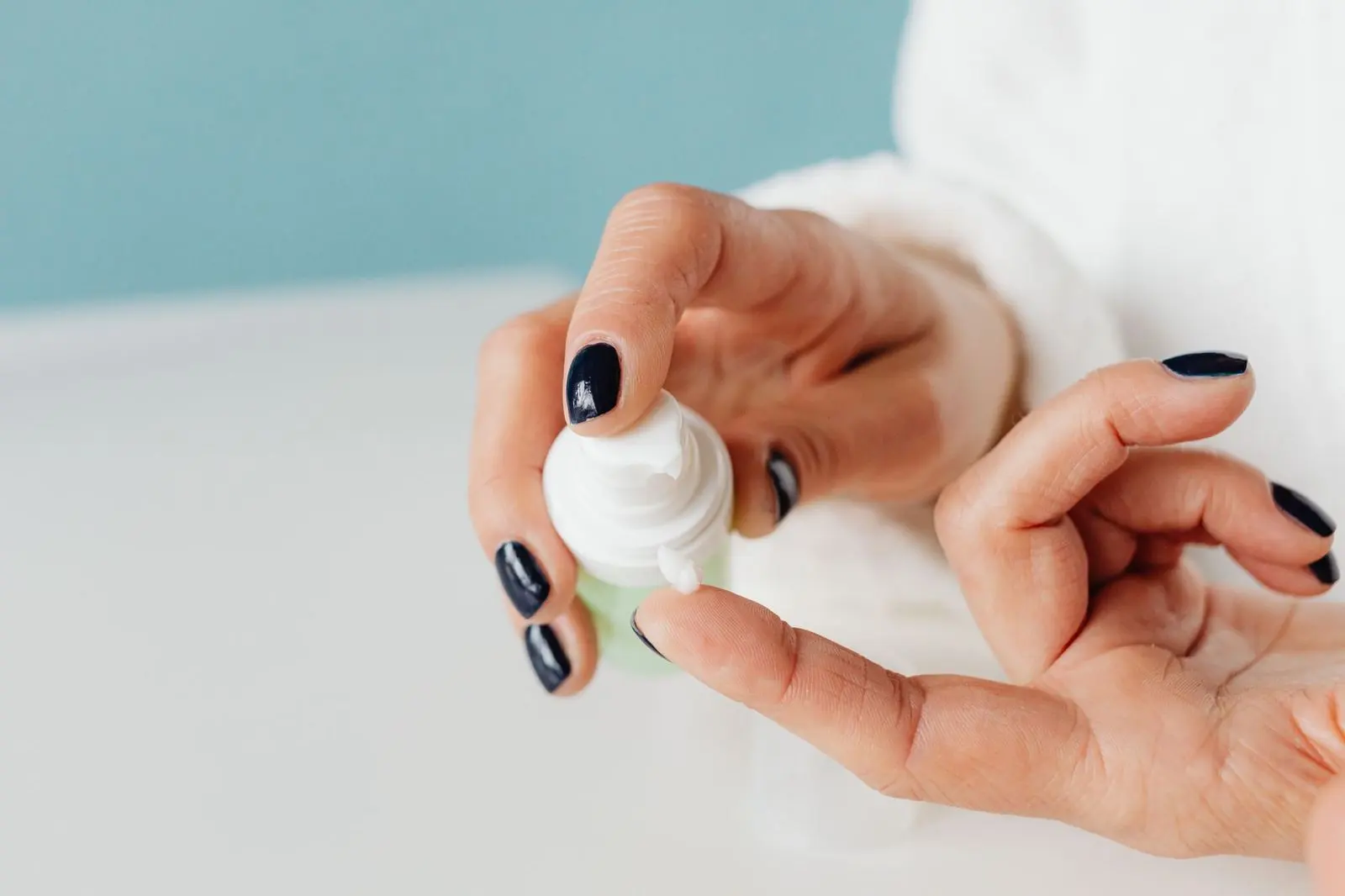
Your moisturizer protects everything underneath it. It locks in moisture and helps prevent transepidermal water loss, meaning water evaporating from your skin, and Cleveland Clinic recommends using one twice a day (source). That matters at night because many products, retinol included, can dry skin out.
If you like to press cream in with your hands as a wind-down habit, our guide to facial massage technique shows how to keep it gentle.
How to use retinol and exfoliants at night
Retinoids are an evening product because these vitamin A derivatives can become deactivated and irritating in sunlight, per Cleveland Clinic. Used at night, the same page says they can help with:
- Removing dead skin cells
- Reducing oil gland production in oily skin
- Smoothing fine lines and wrinkles
- Improving acne and dark spots
Serums and sunscreen sit on the other side of the day, so see our morning skincare routine order for how to place them.
For exfoliating, Cleveland Clinic suggests a chemical exfoliant with glycolic acid a couple times a week, and it says to pick a cleanser or an exfoliant as your first step, not both (source). Strong scrubs are the thing to skip, as the next section explains.
Try skin cycling if you use actives
Skin cycling is a term coined by dermatologist Whitney Bowe, and mindbodygreen describes it as a set schedule meant to prevent irritation and over-exfoliation. The schedule is four days long:
- First night: an exfoliating serum with AHAs or BHAs.
- Next evening: a retinoid, either over-the-counter retinol or a prescription formula.
- The two nights after your retinol: skip the treatment step for recovery.
The same guide says to start low and work up in strength, and to avoid combining multiple actives at the same time. If your skin is sensitive, it describes a “sandwich method”: a layer of moisturizer before and after the retinoid.
Are toners, eye creams and face oils worth it?
Experts disagree here, so treat these as optional. Cleveland Clinic’s dermatologist considers them extras, while mindbodygreen notes that some deem toner an extra step and others couldn’t live without it.
- Toner: thought to shrink pores, but Cleveland Clinic says retinols are much more effective and toners can irritate sensitive skin.
- Eye cream: the same page usually recommends a moisturizer over an eye cream to avoid more irritation, since the skin there is sensitive.
- Face oil: the dermatologist doesn’t recommend it unless you have dry skin, and says to apply it right before your moisturizer if you do try one.
If you add one, add only one, and give it time before the next. Introducing a single new product at a time makes it easier to spot the culprit when skin reacts.
Night-time habits that irritate skin
Most problems come from doing too much. Watch for these:
- Harsh exfoliation. Cleveland Clinic says specialized brushes, salt scrubs, sugar scrubs and charcoal-based products can irritate skin (source).
- Heavy fragrance. The same dermatologist advises minimizing new products and avoiding heavily fragranced ones.
- Stacking actives. Mixing several in one night can be irritating, according to mindbodygreen.
- Coconut oil on breakout-prone skin. An esthetician quoted by mindbodygreen recommends avoiding it in an oil cleanser.
Double cleansing is where sources split. Cleveland Clinic’s September 2025 page says it causes more harm than good (source), while mindbodygreen’s guide describes an oil cleanser or micellar water before a face wash. If you wear little or no makeup, one gentle wash keeps things simple.
If you see signs of contact dermatitis or irritation, stop the product and book a dermatologist visit, Cleveland Clinic advises.
Frequently asked questions
Do I need sunscreen in my night routine?
Show answer
No. Sunscreen is the last step of the daytime routine, and putting it on each morning is described as key to keeping skin healthy, per Cleveland Clinic.
What is the least I can do before bed?
Show answer
Wash your face with a gentle cleanser and follow with a moisturizer. Everything else is a bonus, and extra products raise the odds of side effects.
Can I use retinol and an exfoliating acid on the same night?
Show answer
Skin cycling keeps them on separate evenings, with the acid first and the retinoid the next night, per mindbodygreen. A dermatologist quoted there says combining multiple actives can irritate.
Why does retinol go on at night?
Show answer
Sunlight can deactivate it and make it irritating, which is why Cleveland Clinic places it in the evening slot instead of a serum.
Should my skin routine change if it feels dry?
Show answer
Moisturizer is the first thing to check, since several products can dry skin. A face oil is only suggested for dry skin, applied just before the moisturizer. If irritation sticks around, a dermatologist can advise.